Best practices
Compressed air, steam and motors: where industrial energy savings hide
Compressed air, steam and motor systems run all day and are rarely metered in detail. A practical programme for finding and keeping the savings.

Production lines get attention; the utilities that feed them often do not. Compressed air, steam and motor-driven systems run for long hours, are rarely metered in detail and degrade slowly. That makes them dependable sources of savings for teams willing to measure.
Why utilities matter
The US Department of Energy's Industrial Technologies Office says many manufacturing facilities can recover energy by installing more efficient steam equipment and applying energy management practices1. It makes the same point for motors: large energy and cost savings come from good energy management and from buying efficient equipment2. ENERGY STAR frames the opportunity in management terms: treat energy as a controllable cost and work on continuous improvement4.
Compressed air
Compressed air is often called the fourth utility after electricity, gas and water, yet per unit of energy delivered it is more expensive than the other three3. Most of the compressor's input power becomes heat, so only a fraction reaches the tool as useful work, and every leak or unnecessary use multiplies the loss.
Lifecycle cost shows where the money goes. Over a system life of about 10 to 15 years, one commonly cited breakdown puts energy at 70-75% of total cost, equipment and installation at 15-20% and maintenance at about 10%3. Treat these as indicative rather than universal, but the pattern is consistent: a cheaper compressor with poor part-load control can cost more over its life than a better-controlled one.
A practical compressed air audit
- Log demand over a representative window. A week is an illustrative starting point, not a universal requirement; choose a period covering the relevant shifts, weekends and shutdowns. Record pressure and flow, or compressor power as a proxy. With production stopped, residual flow can help estimate leakage, but identify legitimate standby consumers before attributing it all to leaks.
- Map the end users. List every consumer and the minimum pressure it really needs. Often one or two machines set the header pressure for the whole plant; a local booster or regulator may let the rest of the system run lower.
- Find and tag leaks. Ultrasonic detectors let a technician hear leaks above background noise. Tag each one, estimate its size and track the repair to closure.
- Check piping and drops. Pipe sizing is chosen to limit pressure loss from high velocity at peak demand and from turbulence at fittings3. Undersized headers and long hose runs force higher generation pressure.
- Review controls and storage. Several compressors running part-loaded is usually worse than one at full load and one trimming. Adequate receiver storage smooths peaks and reduces cycling.
- Remove inappropriate uses. Open blowing, cooling and agitation with compressed air are common and usually have cheaper alternatives. Consider heat recovery from the compressor as well.
Steam: where condensate is the enemy
When steam gives up its latent heat it becomes condensate. Left in the system, condensate causes energy loss, water hammer and corrosion5. Steam traps are automatic valves that hold steam back while letting condensate pass5.
A trap can fail in two ways. Failed open, it passes live steam into the condensate return and wastes energy. Failed closed, it backs condensate up into the equipment, reducing heat transfer and raising the risk of water hammer. Neither is visible without testing, so a scheduled survey by ultrasound or temperature measurement is one of the highest-return routines in a steam plant. Traps fall into three main families, mechanical, thermodynamic and thermostatic5, and each suits different duties, so replacing a failed trap like for like is not always right if the duty has changed.
Other steam routines are simple: insulate pipes, valves and flanges, tune boiler combustion and monitor blowdown.
Recovering what is left
Condensate still carries heat and is already treated water, so returning it reduces both fuel and water-treatment cost. More broadly, waste heat is heat released as a by-product of a machine or process that uses energy6. Compressors, boiler flue gas and blowdown are all candidates for recovery. Compressor heat recovery for space or process water heating is often straightforward because the heat is concentrated in one place.
Motors and drives
Motor-driven systems account for a large share of industrial electricity. One estimate quoted in the variable-frequency drive article is that about 60-65% of electrical energy in the United States supplies motors, and that about 75% of that serves variable-torque fan, pump and compressor loads7. Treat it as an order of magnitude, not a figure for your plant.
The physics is the affinity laws. For centrifugal fans and pumps, flow varies with speed while power varies roughly with the cube of speed, so slowing a fan to 70% speed needs only about a third of its full-speed power7. A damper wastes that opportunity by throttling the flow while the fan keeps running at full speed. That is why variable-speed drives can beat throttling on pumps and fans7.
Drives are not always the answer. On a constant, fully loaded duty a drive adds its own losses and can add harmonics. Motor cooling also deserves attention: a shaft-mounted fan cools less as speed falls, so long periods at low speed and high torque should be checked with the motor supplier7.
DOE publishes two practical guides worth having: a sourcebook on motor and drive system performance, Improving Motor and Drive System Performance, and the Premium Efficiency Motor Selection and Application Guide2.
A motor management policy
- Keep an inventory of motors above a threshold size, with duty, running hours and efficiency class.
- Decide in advance whether each motor is repaired or replaced on failure, so an efficient spare is ready.
- Prioritise drives on throttled or recirculating fans and pumps.
- Check belts, alignment and lubrication; mechanical losses waste energy as well as shortening life.
Measuring and verifying savings
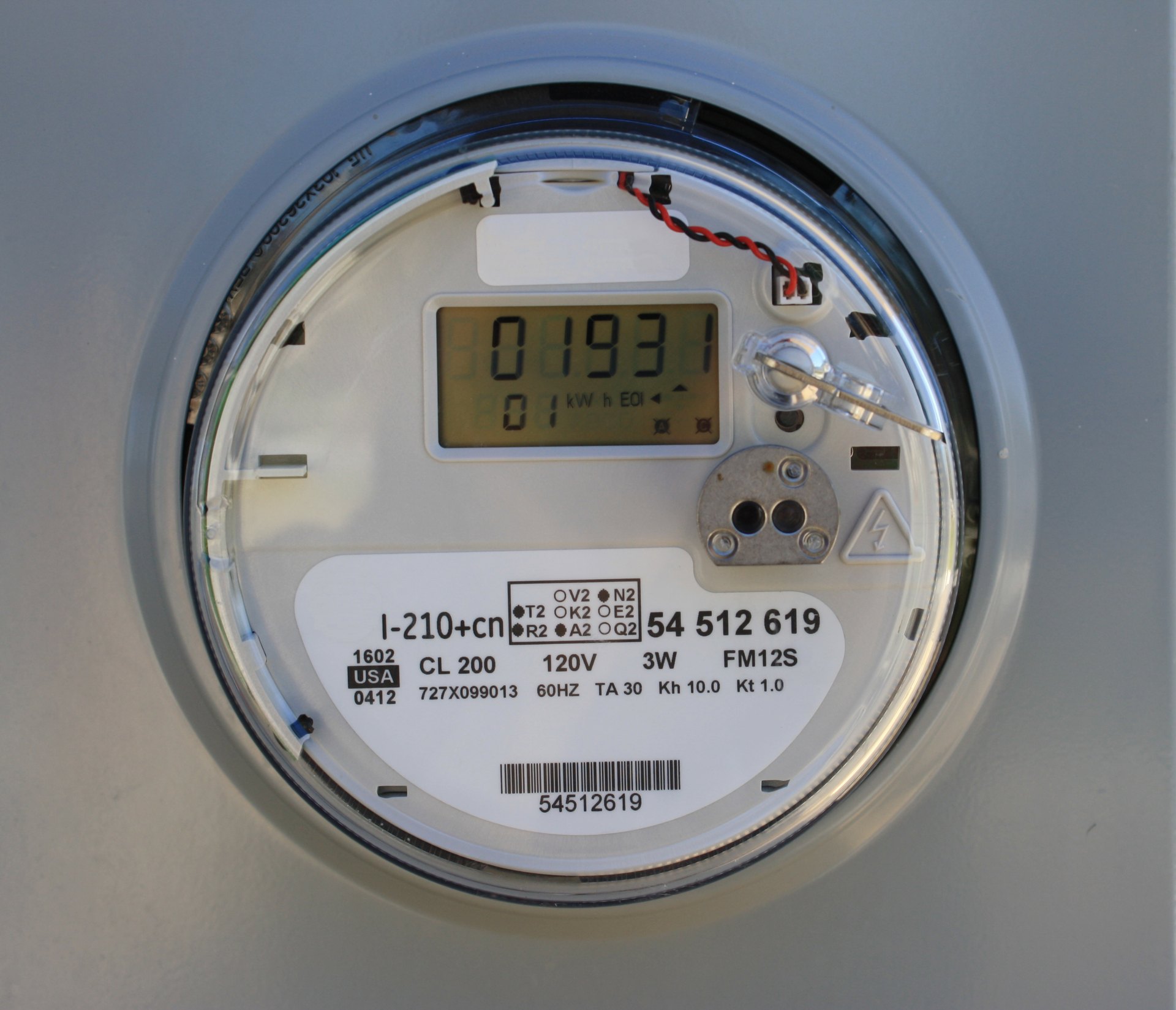
Savings that are not measured tend to evaporate. Before any project, record a baseline normalised for what drives consumption, typically production volume and, for heating loads, weather. After the work, compare like with like over a comparable period. Sub-metering the compressor house, boiler house and large motor control centres is usually the first metering investment worth making, because it turns estimates into numbers that can be reviewed every month.
Finally, put the routines into the maintenance system: leak surveys, trap tests and drive checks with fixed frequencies and owners. That is what turns a one-off audit into an energy management practice, and it fits the structure described in our article on ISO 50001.
Key takeaways
- Utilities are continuous loads, so small losses add up.
- Measure first, then fix leaks, traps and oversized or throttled motors.
- Sustain gains through ownership and metering.
Frequently asked questions
Where should we start?
Usually with a compressed air leak survey and steam trap testing, which are both low cost.
Do variable-speed drives always save energy?
No. They save most on variable loads such as fans and pumps; on constant full loads the savings are limited.
Are the DOE resources usable outside the US?
Yes. The guides cover general engineering practice; check local codes and electricity tariffs.
How do we estimate the leak load quickly?
Measure compressor power or flow while production is stopped but the system is still pressurised. Most of what remains is leakage and unintended use.
Is it worth returning condensate from distant users?
Often yes, because condensate is hot, already treated water. The business case depends on distance, volume and contamination risk.
Sources
Every factual statement marked with a number links to the source below. Unnumbered practical guidance is editorial advice. Sources were retrieved on 24 October 2026; check the publisher for later revisions. Wikipedia pages are used as secondary references and summarised in our own words (Wikipedia text is licensed CC BY-SA 4.0; any short quotation is marked and attributed); vendor pages are cited only to show what a vendor says about itself. Photo credits and licences are on the image credits page.
- US DOE Industrial Technologies Office: steam systems energy.gov
- US DOE Industrial Technologies Office: motor systems energy.gov
- Compressed air (Wikipedia) en.wikipedia.org
- ENERGY STAR: industrial plants energystar.gov
- Steam trap (Wikipedia) en.wikipedia.org
- Waste heat (Wikipedia) en.wikipedia.org
- Variable-frequency drive (Wikipedia) en.wikipedia.org